
Ah, IP-XACT. The tool we never asked for, but somehow can’t live without. It’s like having a GPS for your closet, sure, it gets you to the right pair of socks, but do you really need a turn-by-turn guide to find your T-shirt?
For engineers, IP-XACT promises a world where IP blocks seamlessly align, connect, and just work. But the reality? It’s a wild XML adventure, full of tags, schemas, and enough hierarchy to make even the most organized among us break a sweat. So, is IP-XACT the key to IP harmony, or just another reason to consider switching careers?
For those hearing the term IP-XACT for the first time: IP-XACT is an XML format that defines and describes individual, reusable electronic circuit designs (pieces of intellectual property, or IPs) to facilitate their use in creating ICs. It was initially created as a standard to enable automated configuration and integration through tools, and later evolved into IEEE 1685.1 IP-XACT began at the SPIRIT Consortium, which merged into Accellera in 2010. It was first standardised as IEEE 1685-2009, with revisions in 2014 and 2022.
The Good
IP-XACT establishes a common standard for metadata around IPs, enabling them to work together without the need for endless customization. It’s like everyone speaking the same language, making it easier to swap, integrate, or reuse IP blocks across different projects and tools. Engineers don’t have to reinvent the wheel for every IP; standardized metadata makes integration faster and less prone to errors.
Streamlined IP Management. With IP-XACT, design information, address maps, interfaces, configurations, is centralized. It turns what could be a chaotic folder of scattered files into a well-organized library. Designers can track a large number of IPs without resorting to spreadsheet overload or excessive documentation.
Automation-friendly. XML-based, which while verbose, is easily parsed by tools. You can build scripts around it, generate configurations, and avoid repetitive tasks. Languages like Python come with built-in libraries that parse XML effortlessly. This enables automation of repetitive work, generating register maps, configuration files, freeing up time and reducing manual error.
Enhanced Reusability. IP blocks packaged in IP-XACT can be reused across different designs and projects, ensuring that work done once benefits multiple designs.
Adoption in the Wild
Let’s talk about the not-so-secret sauce of modern SoC design. While IP-XACT might sound like the name of a top-secret spy program, it’s actually the standard that’s helping EDA companies automate the design space. Think of it as the blueprint: it describes an IP’s interface, register maps, and subfields. This seemingly simple data can help generate everything from UVM testbenches to documentation to C-header files.
Here’s where it gets interesting: most IPs in the market use standard interfaces like AMBA or ST, so you’re not starting from scratch. With just a bit more information, you can map NoC signals directly to IP interface signals. Add sideband signals, interrupts, and I/Os, and an SoC starts coming together like magic. And IP-XACT doesn’t stop at stitching together RTL, it can also help generate UVM, register models, C-tests, and documentation.
The Obvious Bads
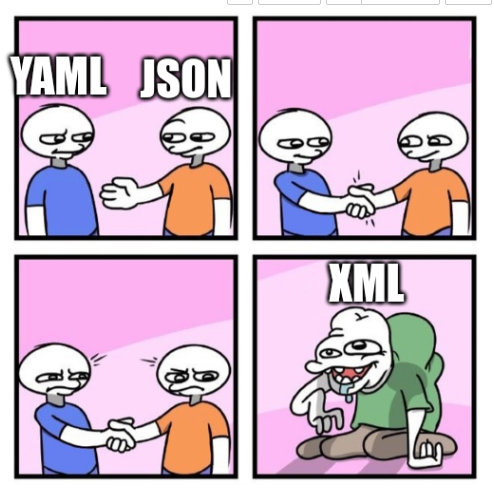
XML Complexity and Verbosity. For every piece of data, there are often layers of nested tags that make even simple configurations look like an ancient spellbook. Debugging can feel like finding a needle in a stack of needles.
Limited Tool Support Variability. While many EDA tools support IP-XACT, support varies and interoperability is often imperfect. Sometimes tools interpret the XML differently, leading to compatibility issues that eat valuable engineering time.
Steep Learning Curve. IP-XACT has a real learning curve, especially for engineers unfamiliar with XML or metadata standards. This initial barrier can be significant in fast-paced projects.
Overhead for Simple Projects. For smaller projects, IP-XACT’s detailed structure may feel like overkill, adding unnecessary complexity without much added value.
Where This Leaves Us
The thought process behind IP-XACT was undoubtedly on point. It tackles a major pain point in SoC design: the repetitive and error-prone nature of manual work. When you’re spending hours copying and pasting register addresses or defining interfaces, automation clearly saves headaches. IP-XACT has laid the groundwork for many methodologies to flourish.
That said, XML isn’t exactly a fan favorite. It’s clunky, verbose, and frankly annoying. So here’s the deal: take the core principles of IP-XACT, capture the critical info about interfaces, register maps, and subfields, and build something new. Modern markup languages are a much better fit for today’s workflows.
The goal is simple: develop your own spec using a more intuitive format, but ensure it can still be converted to XML when needed. Why? Because backward compatibility is key, and many tools still rely on IP-XACT format. Build with the future in mind, but make sure you’re speaking XML when the need arises.
In the end, IP-XACT is not the villain. It’s just the old guard that could use some modernization. Take the good, leave the bad, and build something that works better for everyone.